How Much Does a Fence Cost
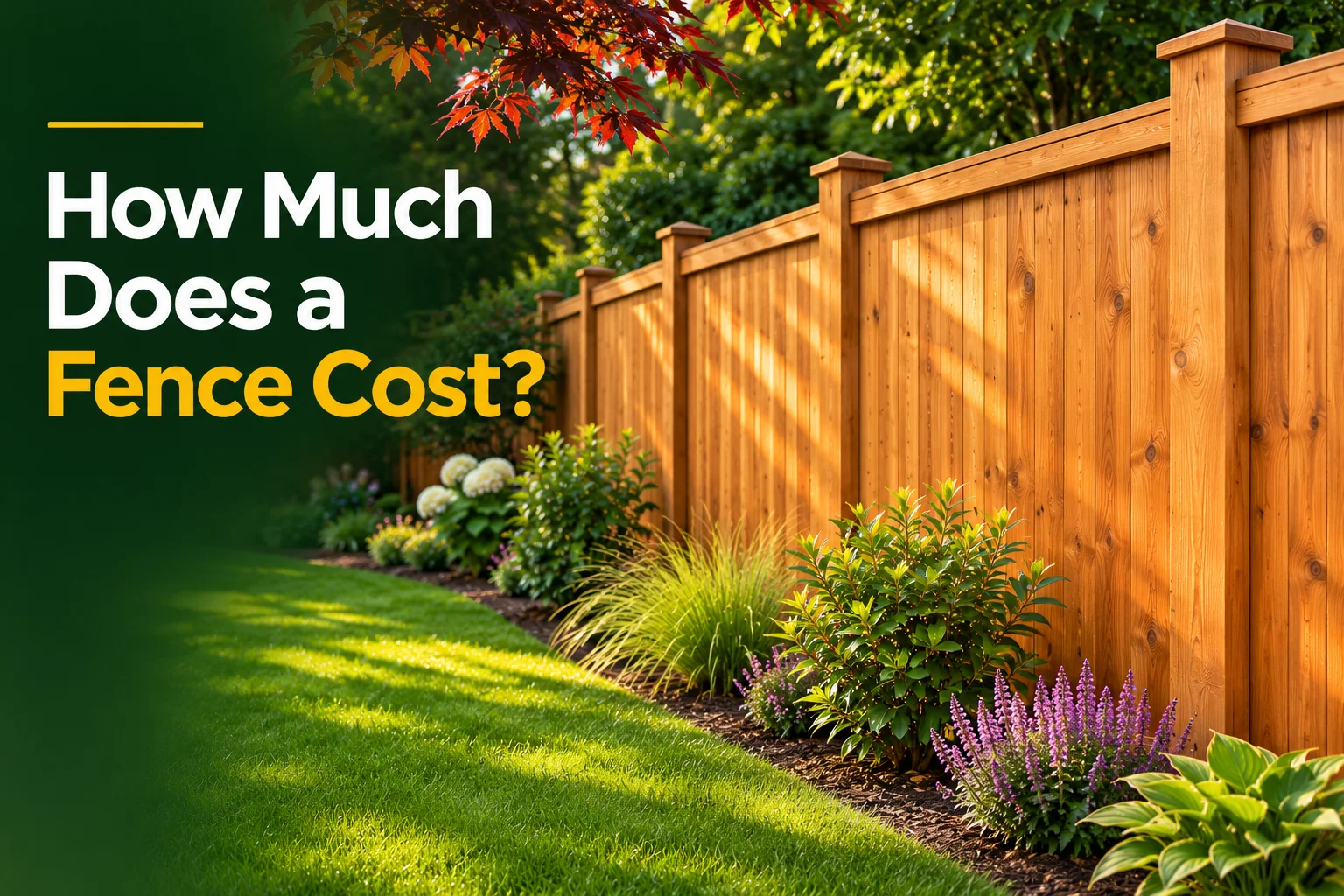
Fence installation in the US costs an average of $3,277 in 2026, with most homeowners paying between $1,860 and $4,844. The price of the fence will depend on the material, length, height, style, and requirements of the installation.
If you're planning to fence off your backyard, replace an old fence or create a boundary around your property, you need to understand the costs involved. You need this understanding in order to make a realistic estimate of your budget for this project. This guide will help you understand different factors affecting the average cost of installing a fence, price per linear foot, types of materials used and other expenses you may incur in the process of hiring the contractor for the job.
How Much Does It Cost to Install a Fence?
As an example, a simple boundary fence will need less preparation than a project with unstable ground or difficult access and a more complex design.
One of the ways of estimating the costs for the project is following the price per linear foot, allowing you to link it to the amount of installation.
Fence Installation Cost Per Linear Foot
The cost of fence installation is approximately anywhere from $6 to $50, with the average being around $23 per linear foot. In terms of definitions, a linear foot is the length of the fence that is significant in calculating the costs of the undertaking.
To have an idea of how much the entire project will cost, you can multiply the total number of linear feet required for the fence by the price to install it per linear foot. For instance, if a fence measuring 100 linear feet is needed for your property, and the installation is estimated at $23 per linear foot, the total installation cost will be $2,300.
However, this calculation will not show you the entire picture of the project on the whole. The kind of materials chosen, the number of gates and the condition of the site will affect the final price.
What Is Included in a Fence Installation Estimate?
The estimate to install the fences may include materials and labor, but the details depend on the contractor and the project. The main costs to check include:
Fence materials: This can mean panels, planks, rails, or mesh depending on your choice of materials and design.
Posts and fasteners: Supports, brackets, screws, and any other equipment to hold the fence.
Labour for installation: Generally includes measuring the site, making holes for the posts, securing the posts, and assembling the fence.
Installation of the gate: Gates, hinges, latches, and other hardware are either charged separately or are included in the estimate.
Site preparation: Clearing the area and preparing the soil ahead of the installation.
You must ask the contractor for the details of the estimate to avoid any problems. Double-check if the estimate includes all costs such as installation permits, disposal, etc.
How Much Does a Fence Cost by Size?
To get the base cost, multiply the needed fence length by the installation cost of the chosen material.
Cost to Install 50, 100, 150 and 200 Linear Feet of Fence
Fence Length
Estimated installation cost
50 linear feet
$1,150
100 linear feet
$2,300
150 linear feet
$3,450
200 linear feet
$4,600
The estimates in this case must use the same price per linear foot in order to compare values. Further costs, including gates, site preparation and the disposal of the old fence, may make the final price increase.
How to Measure Your Yard for a Fence
In order to calculate the length of fence you will need, measure the entire area you wish to fence. All measurements should be summed and combined to determine the required amount of fencing. If the shape of your yard is irregular, it is best to measure the length of each side.
In addition, if there is an existing wall or building, feel free to ignore that area as no fencing will be required in that particular spot. You also need to indicate where the fence gates will be placed since that affects the length of fence required too.
Why Lot Size Is Not the Same as Fence Length
Knowing the area of a property doesn't tell us how long the fence will be. Properties can have the same area, but their measurements can differ.
For example, a long and skinny property may need more fence than a small and square property.
That is why it is better to measure the length of the fence before doing any calculations, rather than relying on the area of the property itself. This way, you know the estimated length of fence that you need.
Fence Installation Cost by Material
The material you select will determine both the cost of constructing a fence initially and what you will spend in terms of maintenance in the future. Certain materials will be cheaper at first but may require frequent maintenance, while others may be more expensive at first and need little maintenance later.
Cost of Wood Fences
Wood fences are popular with people who want a more traditional look as well as room for creativity. The cost will depend upon the different kinds of wood available and the height, design and the way of installation. Simple designs will cost less as compared to complicated ones and the ones that have been made out of best quality wood.
But initial cost is just one side of the coin. Wood fences will have to be painted and stained regularly in order to keep them safe from bad climatic effects and moisture.
Estimated cost of installation: $10 to $45 per foot.
Vinyl Fence Cost
Vinyl fencing is an alternative for homeowners seeking a neat look without regular painting or staining of a wooden fence. Available in numerous shades, styles and types (privacy panels or picket fences).
Despite the fact that vinyl may be more expensive initially than some basic fence materials, the maintenance costs are lower. Although it still needs to be cleaned from time to time, damage can still occur, which means repairs are needed.
Estimated installation costs: $15-$35 per linear foot.
Chain-Link Fence Cost
Chain-link fencing is often used to mark a boundary line of property, to fence off gardens, or provide security for pets. Its open design is not suitable for homeowners who seek more privacy.
One of its advantages is that it costs less than many solid or decorative fence types. The price depends on the specific height of the fence, what coating it has, how many posts are needed and what the conditions are for its installation. Privacy slats may potentially be added too, although they imply a higher final price.
Estimated installation cost: $8–40 per linear foot.
Aluminum and Wrought-Iron Fence Cost
Aluminum and wrought-iron fences add extra beauty and still create a solid barrier around property lines. They are mostly chosen for front gardens, driveways, and other areas where looks are important.
Aluminum is very light in weight and easy to maintain, as it doesn't rust as regular iron does. On the other hand, wrought iron has a more traditional and solid look, but it is prone to rust and needs to be treated properly.
· Prices for aluminum installation vary from $17-$90 per linear foot.
· Prices for wrought iron installation vary from $25-$55 per linear foot.
Composite Fence Cost
Composite fencing is a combination of plastics and wood fibres designed to deliver a look similar to that of wood, with less upkeep work involved in its care. The material comes in numerous shades and patterns, thereby satisfying homeowners who prefer their fences to look identical while avoiding the need for frequent staining.
On the other hand, composite fencing may be more expensive at first when compared to some traditional products. Its price will depend on the quality, design of the fence panels, height of the fence, as well as costs of installing it.
Estimated cost of installation: $11-45 per linear foot.
Which Fence Material Offers the Best Value?
When it comes to determining the most cost-effective fence solution, the initial installation cost isn't the only factor to consider. For owners looking for a basic barrier, chain-link may be ideal, while wood is aesthetically pleasing with its high level of design versatility, and vinyl provides a low-maintenance solution to fencing. Homeowners who value performance over looks may find the practicality of aluminum or wrought iron or the benefits of using composite fencing more attractive.
If you wish to assess different fencing solutions without bias, take into consideration three decisive factors: installation expense, maintenance costs and the life of the fence.
How Much Fence Style and Height Affect the Price
The type of material used in constructing a fence, as well as its style and height, determine how much material is needed and how difficult the installation will be. A simple boundary fence may incur less cost compared to a higher installation that has an aesthetic appearance or offers privacy.
Privacy Fence vs Picket Fence Cost
According to estimates for 2026, the cost of picket fences ranges from $5 to $30 per linear foot, while the price of privacy fences ranges from $10 to $40 per linear foot. The reasonable overlap in these price ranges results from the fact that the overall cost is predetermined by various factors, such as the choice of material, fence height and the type of construction.
Privacy fences use either solid boards or solid panels or have very small gaps between them. This makes privacy fences suitable for backyards and places for outdoor leisure. Picket fences consist of vertical boards placed apart from each other, which allows visual observation of what happens through a picket fence and makes them appropriate for front gardens.
How Much More Does a Taller Fence Cost?
A taller fence tends to be more expensive than a shorter one because it requires more materials. Taller fences require stronger posts and more structure, which leads to more expenses for building such a fence. This means that heavier panels installed in troublesome landscape areas are likely to be more costly than lighter panels.
When deciding the height of your fence, decide what purpose the fence has and whether you might have any issues with local regulations concerning the fence height. It will help you save extra money on a taller fence if it is unnecessary for your property.
Decorative and Custom Fence Designs
Luxurious and customizable fences allow a homeowner to make the fence correspond with the style and construction of the property. The use of ornamental panels, rounded segments, unusual configurations, and custom gates makes fences more expensive.
If the budget is limited, a homeowner should compare the standard options and customized ones to understand what features are significant for them.
What Factors Affect the Total Cost of a Fence?
Apart from the materials and design of the fence, other installation factors such as labour costs, property condition, location and material supply will influence the final installation quotation from contractors.
Labour Installation and Complexity
Labour costs will depend on how long the process takes and the skill set and equipment needed for the fencing task. A simple installation has fewer requirements compared to one with heavy panels, narrow passageways and tricky soil conditions.
Sloping Ground, Soil and Site Preparation
A property's characteristics greatly influence how feasible it is to install a fence in a specific location. For example, a slope will require some stepped approach or a fence designed along the slope, while hard or rocky soil will make digging postholes hard.
There may also be a need to deal with the vegetation or any obstructions such as tree roots or rough surfaces before the installation can start.
Gates, Corners and Fence Layout
The cost of Gates can vary from $150 to $2000. The type of gate and our installation requirements depend on its design.
Gates incur additional costs in addition to the gate itself, which include hinges, locking and fitting. It may be that bigger and more complex gates need extra supports.
The corner and direction also decide how many posts are going to be needed, and the position of each post.
Location and Local labour rates
Cost of fence installation depends on your location, because labour rates differ in different areas.
Seasonal demand and material availability
Time of year affects the schedule of installation and prices. During busy periods of time, contractors may not be able to deliver the right materials on time. Planning your installation will give you time to compare prices and see what is available.
Additional Fence Costs Homeowners Should Budget For
Your first estimate may not be the only factor that determines costs. Other aspects of your project may raise the total, so take these potential costs into account when making your budget.
Taking Down and Disposing of an Old Fence
In many cases, replacing an old fence involves the removal and disposal of the old fence as well. This can cost between $3-$5 per linear foot. Make sure to ask your contractor if these costs are included in the estimate or if they will add charges for this work.
Permits, Property Lines and Utility Checks
Depending on where you live, it is possible you may need a permit to build a fence. The cost for obtaining a fence permit can be around $20 to $60 depending on the local laws. Check your property lines as well. Make sure to get a utility check before you start digging.
Tree Removal, Grading and Difficult Access
Obstructions such as roots, woodland, rough terrain and limited access to the site may lead to higher costs incurred on work preparation, which would require advanced equipment and professionalism. Usually, levelling of the ground costs from $1,000 to $3,200 depending on the size of the area and the job to be done. Note that this only applies to those cases where extensive levelling is required instead of every fence installation.
Coating, varnishing and other decorative costs
Depending upon the type of wood used, a fence should be painted, coated or sealed according to its structure for aesthetic effects and protection.
DIY Fence Installation vs Hiring a Professional
Doing your installation can allow you to cut down on labor costs, but spending on the required items and equipment, in addition to mistakes, may offset your savings. On the other hand, while professional installation is more expensive at first, it can be a smart investment for complicated efforts.
How much savings can you achieve when building your fence yourself?
Doing your installation can allow you to save on labor costs and spend the savings on materials instead. However, your actual savings depend on the size of the fence, its design, and how effective you are at doing this type of work.
Tools, Materials, and Other Costs of DIY
You may need to acquire measuring tools, a level, posthole digger, fasteners, and personal protective equipment to do your work. However, renting some of this gear, ruining materials, or altering installation plans will add to the total cost of your project.
When Is Professional Installation Justifiable?
Using a professional installation crew is worth it if your land has elevation changes, difficult soils, or complex fence designs to implement. A pro will evaluate these factors and do the fence installation within a shorter time frame.
How to Estimate Your Fence Installation Budget
Try these steps to combine your measurements, material selection, and other expenses into a single estimated project budget.
Calculate the Total Fence Length
Take measurements for each section of fence you're going to install and add together all of the measurements. If you have a rectangular yard, you can find the perimeter by adding lengths together and multiplying the total by two.
Adjust the amount according to whatever existing boundaries there are in the situation.
Choose a Material and Estimate the Base Cost
Now, you should pick out the material based on your circumstances and budget. Multiply the amount of materials needed by the estimated costs for the installation of the chosen material on the fence.
Add Gates, Preparation and a Contingency
Deduct the cost of gates, the removal of the old fence and site preparation from the quote and the finishing work and any applicable permit costs that are not declared in the estimate. Check everything against your contractor's quote in order to avoid duplicating costs.
You should also include some contingency amount in case you encounter unexpected costs arising from the ground conditions or the existing borders that have not been accurately evaluated pursuant to the aforementioned quote.
Conclusion
The price of having a fence put in depends on what your site needs, the type of materials chosen and the expected work hours. You can prepare a budget to determine the overall cost, not just the cost of the first installation, by measuring the boundaries, comparing different materials and getting the estimated additional costs.
Before committing, compare itemised quotes and confirm what each contractor includes. Talk to Trader to explore your options and find a suitable trade professional for your fencing project.
Looking for a trusted professional?
Compare quotes from vetted tradespeople in your area — free and no obligation.
Get Free Quotes →