How Much Does Sod Cost Per Square Foot?
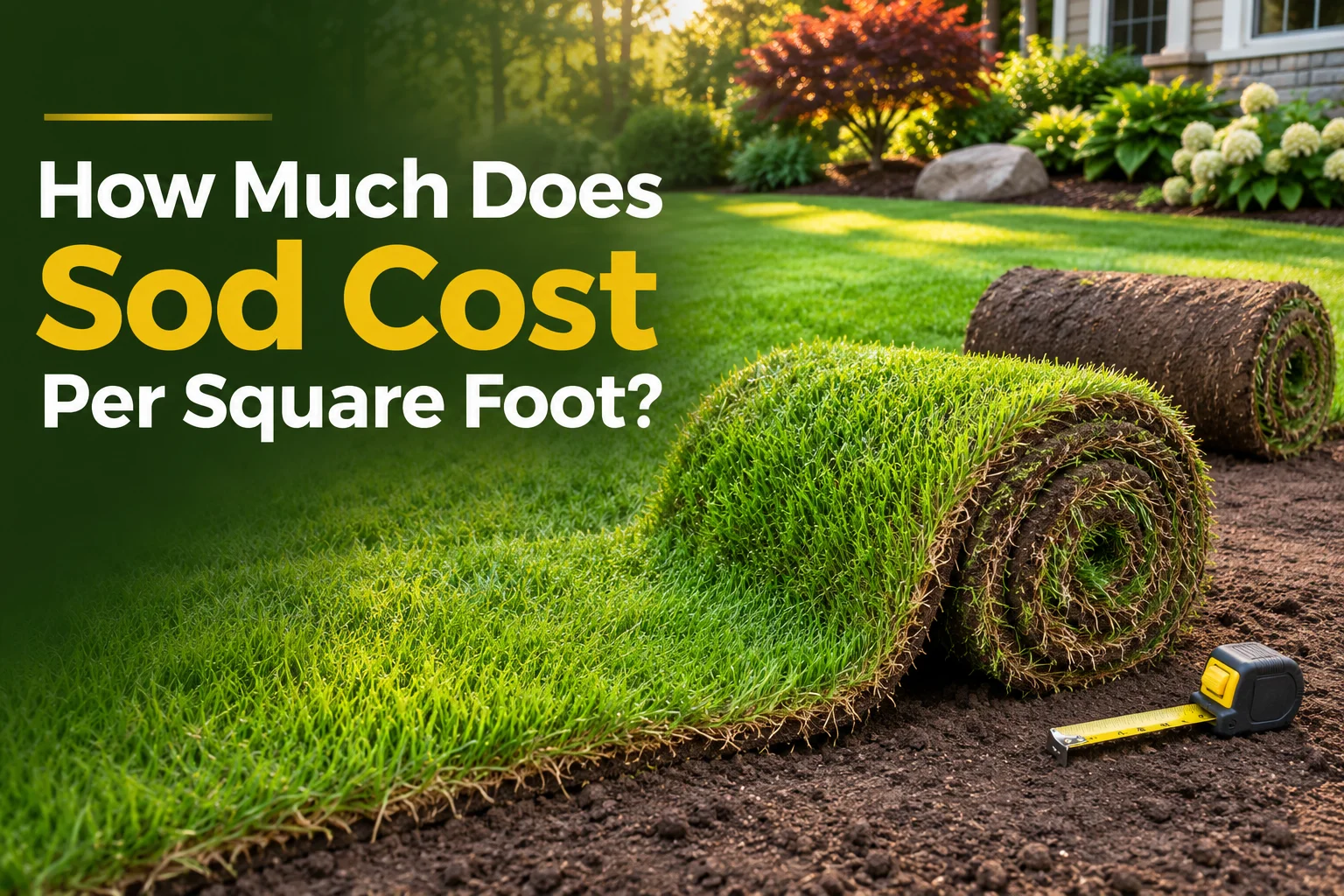
In terms of sod cost, it generally varies from $0.30 to $0.85 per square foot for just the materials. However, in terms of professional sod installation, prices range from $1 to $2 per square foot. If you need to remove an old grass lawn, you can expect costs to be much higher; prices range from $1.50 to $4 per square foot for sod installation in such cases.
For example, if you want to install sod on a 1,000-square-foot property, sod replacement would normally cost you $1,000 to $2,000. Details such as the existing condition of your yard, type of sod chosen and the degree of pre-installation work may all contribute to price changes.
Sod Cost Per Square Foot with Installation
The regular cost of a sod installation is $1-$2 per square foot for a new lawn with minimum ground preparation. The cost covers sod, delivery, ground preparation, and labor for the installation process. The cost of sod and delivery makes up $0.50 to $1 per square foot, while ground preparation and labor cost another $0.50 to $1 per square foot.
The costs may increase if the old lawn has to be removed before planting new grass. The old grass disposal costs an additional $0.50 to $2 per square foot. Additional costs may arise for grading and soil improvements.
Flat grounds can be worked on faster compared to uneven terrain with trees, slopes, and hard-to-access areas, which may require extra equipment and help of workers.
When gathering quotes for the work, check if grass removal, ground preparation, delivery, and cleanup are included in the obtained quotes.
Estimated Cost for 500, 1,000, and 2,000 Square Feet
The size of your yard will determine the amount of sod required and provide you with the basic figures for budget allocation. Nationally, the installation of new lawns costs anywhere between $1 and $6 per square foot, according to the well-known approximations for a few lawn sizes:
Lawn Size
Estimated installation cost
500 sq. ft.
$500-$1,300
1,000 sq. ft.
$1,000-$2,500
2,000 sq. ft.
$2,000-$5,000
These are cost estimations, not quotations. The amount is dependent on the lawn grass used, labor rates, and the need for site preparation. There are chances that big orders can meet the demands of the supply organization, but the delivery and landscaping should be taken into account too.
How Much Does Sod Cost by Grass Type?
The grass type you pick will impact the sod expenses since each type has its unique maintenance needs, availability, and growing demands. Bermuda and Kentucky Bluegrass, for instance, are generally considered to be budget-friendly options. On the other hand, certain types of Zoysia grasses can be more expensive because of their growth characteristics and availability. As of estimates made at the beginning of 2026, the sod prices are estimated to range between approximately $0.28 and $0.90 per square foot, taking into account the six varieties of grass on the list. These prices do not include professional installation services.
Bermuda Grass Sod Cost
Bermuda grass sod costs around $0.30 to $0.85 per square foot. This allows consumers to order it as a popular option for people who cherish durability when sodding their backyards. This type of grass is perfectly suited for warm environments, can survive under the full sun and has the ability to recover fast from intensive foot traffic. Hence, Bermuda grass sod can be used for lawns, sports fields and areas with heavy foot traffic.
Zoysia Grass Sod Cost
The price of Zoysia sod can range from $0.28 to $0.80 for one square foot of land. Sometimes, the cost of Zoysia sod may be slightly higher for special types. Nevertheless, Zoysia sod is well known for the stiff and good-looking grassy lawn it produces. The strong plant's capacity to endure warmer weather, moderate foot traffic, and limited shade is outstanding. However, the grass grows slower than Bermudagrass, which means it takes longer to grow and recover after being damaged.
St. Augustine Grass Sod Cost
The average cost of St. Augustine grass sod is approximately $0.30 – $0.80 for one square foot. Its main growing area is located in warm and humid zones like the southern United States. St. Augustine sod has wide leaves and looks really thick. Shade tolerance is one of the most important advantages that allow the grass to grow in places under the shade most of the day. On the other hand, the grass requires constant moisture and must be controlled in regions with cold weather or drought.
Kentucky Bluegrass Sod Cost
Kentucky Bluegrass sod is typically priced between 0.30 and 0.55 cents per square foot. This grass is known for its color and durability and can suffer minor injuries to lawns because of its underground stems. Kentucky Bluegrass does best when grown in cooler, well-lit and regularly watered areas. It may not thrive in hot areas, so it is important to ensure a good fit between the grass type and a specific region before buying it.
Fescue Sod Cost
Fescue sod prices are usually between $0.35 and $0.70 a square foot, depending on where the sod comes from. Tall fescue is favored because it is tolerant of shade and various types of soil and does well in dry conditions because of its ability to form deep roots. Fescue is used in cooler and transitional areas of the US. Fescue has been a good choice for homeowners who do not want to worry much about watering their lawn but its growing ability depends on local temperature conditions.
Centipede Grass Sod Cost
The price of centipede grass sod ranges from $0.35 to $0.90 for each square foot. It is a type of grass that thrives well in warm areas in the southeastern United States. The grass doesn't require frequent mowing compared to other kinds of grass and is selected mainly by residents looking for an easy-to-maintain lawn. However, centipede grass is not tolerant of too many people's feet walking on it and works only in suitable weather conditions.
What Factors Influence Sod Pricing?
The price of sod does not rely only on the type of grass that is chosen. There are several other factors that affect its price. The quality of sod, its growing conditions, the layout of the lawn, and location are among those factors that influence the pricing of sod.
Grass Quality and Growing Conditions
The price of sod has a lot to do with the quality. High-quality sod includes strong grass with good density, uniformity in color, and well-formed roots, which increases its price. Certain species of grass need more time and resources for growth, which causes higher production costs that result in a rise in retail prices for sod.
Lawn Shape and Accessibility
The shape and size of your lawn will determine the final cost of your sod installation project. Even though the total square footage will show the amount of sod needed, an irregularly shaped lawn might require additional cutting, which will cause extra labor costs. Accessibility matters as well. In case the workflow is complicated because of trees, narrow paths and slopes, it will take the technicians much more time to install sod.
Local Climate and Regional Availability
Local climate plays an essential role in determining what grass types can be supplied for growing and selling purposes in a region. Warm-season varieties, like Bermuda and St. Augustine, are popular options in the southern states of the US. On the other hand, cool-season varieties like Kentucky bluegrass or fescue are more commonly found in the northern parts. If a specific type cannot be cultivated within a certain region, transportation costs and the price of the grass brand increase. Thus, it is recommended to select the right variety depending on the region.
Seasonal Demand and Supply
Seasonal trends affect the way sod can be bought and sold, and its prices. Demand for sod tends to be high in spring and early summer, which can affect the availability of the grass type. Thus, high demand can sometimes mean there is not enough stock on hand to meet local needs, and delivery may become complicated. On the contrary, lower demand often means better prices available from suppliers.
What Additional Expenses Come with Sod Installation?
The price of buying and installing sod does not always incorporate all the preparations needed for your lawn. Depending on your land condition, you might need to spend money on grass clearing, soil testing, topsoil, delivery, as well as lawn treatments.
Removing Existing Grass and Waste
If you have grass, weeds or unwanted plants, you will have to clear the area before laying the sod. The removal of your lawn may cost around $0.50 to $2 per square foot depending on removal technique, labor and disposal needs.
The contractors may apply a sod cutter in order to dispose of the old grass and roots, followed by cleaning the area of stones, weeds and other rubbish. After that, the surface should be leveled for installation of new sod.
Soil Testing and Preparation
Soil testing helps detect soil problems that can undermine the success of your new lawn. A regular soil test costs anywhere from about $10 to $50, depending on the type of laboratory and the tests performed.
This test can check whether the pH of your soil is inappropriate or whether it is deficient in certain vital elements. Depending on these results, you will be required to work on your soil before putting sod down. A contractor may also aerate the soil and perform leveling operations to create the optimum conditions for root growth.
Topsoil and Soil Improvements
Topsoil may have to be added if the lawn suffers from uneven ground, poor-quality soil or an insufficient level of organic matter. Topsoil is usually $10 to $50 per cubic yard, while compost is around $20 to $50 per cubic yard.
Depending on the condition of your lawn, you may also need sand, compost and other soil improvements to solve drainage and nutrient problems beforehand.
Sod Delivery and Equipment Rental
Bringing sod to your location by a vendor can push your budget upwards, especially considering the large scale of the order or the location of a farm from which you buy the sod. The delivery charge can range from $50 to $250 per load depending on the delivery distance and number of sod rolls ordered.
If you are planning to place the sod by yourself, renting tools may cost additionally. For example, renting a rototiller requires about $50 to $100 in expenses per day. A sod cutter would cost around $70 -100 daily as well.
Fertilizer and Initial Lawn Treatments
Once sod has been laid, it needs proper nutrients and care for good root development. The price of starter fertilizer varies within the range of $15-$65 depending on the product.
Moreover, the lawn should be treated to deal with weeds or pests and make necessary changes to the soil in order to grow healthy grass based on the conditions of the area.
How Much Do Professional Sod Installation Services Cost?
Hiring a professional sod installation contractor can make the process easier, particularly if your lawn requires ground preparation, levelling or the removal of existing grass. Professional services typically charge according to the lawn's square footage, labor requirements and the condition of the property.
Average Labor Charges
Professional sod installation labor generally costs $0.50 to $1 per square foot, or approximately $35 to $80 per hour.
For a 1,000-square-foot lawn, this means labor alone could cost around $500 to $1,000, excluding the sod and other materials.
However, contractors may charge more for smaller projects with minimum service fees or properties that require additional preparation.
What Is Included in a Professional Installation?
A professional installation usually covers several stages, starting with inspecting the lawn and preparing the ground. Contractors may remove existing vegetation, loosen compacted soil, level the surface and add topsoil or fertilizer where necessary. Once the ground is ready, they arrange the sod pieces in closely fitted rows, trim the edges and roll the surface to improve contact between the roots and soil.
Many installers also provide initial watering and remove leftover materials after completing the job. However, these services are not always included in the quoted price, so confirm the scope of work before hiring a contractor.
When Should You Hire a Sod Installation Contractor?
Hiring a professional is worth considering when you have a large lawn, uneven terrain or an existing yard that needs extensive preparation. Contractors also make sense when you have limited time, lack the necessary equipment or are unfamiliar with laying sod correctly.
For smaller, flat areas, DIY installation may be manageable if you have the right tools and enough time. However, if your property has drainage problems, steep slopes or poor soil conditions, professional advice can help you avoid installation mistakes and unnecessary replacement costs.
What Does a DIY Sod Installation Project Require?
Doing your own sod installation can help you save on costs, especially if you have a small lawn or one that does not have many hills or dips. Before placing your order for sod, check that you have the time and equipment to do the work before it arrives.
Tools, Equipment and Materials Needed
There are a few tools required to complete your sod installation smoothly. A shovel, a rake, a wheelbarrow, measuring tape, a water hose, a turf roller and a utility knife are some of the tools that you will need during installation. If you are removing existing grass, you will also require a sod cutter; if you need to aerate your soil, a tiller and starter fertilizer. Preparing all your supplies ahead of time is important for cementing the turf.
· Sod costs approximately $0.30 to $0.80 per square foot.
· Starter fertilizer costs $15 to $65.
· A soil-testing kit costs $10 to $40.
· A rototiller rental costs $50 to $100 per day.
· A lawn roller rental costs $10 to $25 per day.
· A broadcast fertilizer spreader costs $40 to $200.
· A hand tamper costs $30 to $80.
· A wheelbarrow costs $50 to $150.
· Basic tools, including a tape measure, shovel, and sod-cutting knife, can cost $50 to $200.
Basic Steps for Installing Sod Yourself
You must initially establish the size of your lawn, then calculate how much sod to buy. To carry out the process, you must follow the following steps in sequence: eliminate the existing grass, weeds, rocks, and dirt to make the surface even; treat the soil with the necessary amendments or fertilizers; lay sod on it in staggered rows; and trim sod pieces with a knife where necessary. After you have covered the entire area with sod, you have to roll the surface and irrigate it well so that roots start getting in touch with the soil.
Common DIY Mistakes That Can Waste Money
One common mistake is to order too much or too little sod as a result of poor measurements. Poor preparation of the soil can also lead to uneven surfaces and poor rooting. Having spaces between the pieces of sod causes the edges to dry before watering, while waiting too long to install the sod after delivery leads to deterioration of the grass. Another costly mistake is inadequate watering during the establishment period. Follow the instructions on watering provided by the supplier and make sure to install the sod right after delivery to prevent losing money.
How Do You Calculate the Amount of Sod Your Lawn Needs?
Before placing an order for sod, it is important to calculate the required amount so as to avoid either buying too much or too little for the project. The process involves measuring the length and width of your lawn so that you can arrive at its total square footage. In addition, accurate measurements make it possible to compare prices from different suppliers and also enable you to have a good estimate of your budget.
Measuring Your Lawn's Area
To get the square footage of your lawn, use a measuring tape and measure its length and width. If your lawn is rectangular or square, you can get the square footage by multiplying length by the width.
Thus, the formula will be as follows:
Area = Length × Width
For example, to calculate the lawn's square footage in case its length is 40 ft and its width is 25 ft, multiply 40 by 25 to arrive at 1,000 sq. ft.
Calculating Sod for Irregularly Shaped Areas
Divide your lawn with an irregular shape into smaller sections, considering the ground layout. You can use triangular areas, rectangles, or squares to do that. After that, you can measure the square footage of each section and sum up all results to get the total size of your lawn. For triangular areas, calculate the area as follows: the base of the triangle multiplied by its height and divided by 2. Using this method allows measuring irregularly shaped lawns without ordering excess sod.
How Much Extra Sod Should I Buy?
It's always a good idea to order about 5-10 percent extra sod compared to the measured area of your lawn. For instance, if the area of your lawn is 1000 square feet, then order from 50 to 100 square feet of sod additionally, which means the total area will be from 1000 to 1100 square feet. If you are dealing with a lawn with lots of curves and obstacles, order more sod, as close as possible to the top of the suggested 10 percent.
7 Ways to Reduce Your Overall Sod Installation Costs
Even though it can be an expensive proposition to install sod, there are ways to manage costs while maintaining a healthy lawn.
1. Get Quotes from Several Companies
Before going ahead with the installation process, make sure you obtain quotes from several local sod-selling companies.
2. Use Grass Types That Can Grow in the Local Climate
Whenever possible, go for grass types that fit into this category. Grass types that are not suited for local climatic conditions run the risk of dying and requiring replacement.
3. Do Some Preparation Work Yourself
If you need to prepare the ground only slightly, consider carrying out the minor cleansing, garbage removal, and surface leveling yourself before the workers come in. If the task is too complicated, do not hesitate to get help from the professionals.
4. Take Advantage of Bulk Purchase Price Cuts
For those with sizeable lawns, inquire with suppliers if they give bulk order discounts. Certain suppliers offer pricing that is lower per square foot if the quantity is large enough. In order to save on delivery costs, consider teaming up with neighbors to place joint orders.
5. Choose Your Ordering Time Wisely
Take note of the optimal time to place your sod order as it pertains to the growth cycle of the grass type you are interested in. Ordering when the demand is down can lead to professional sod installation at favorable rates and conditions. Avoid ordering at a time when the weather conditions or temperatures could interfere with successful sod establishment.
6. Do Not Order Extra Sod
By measuring the area that requires coverage accurately, you will reduce unnecessary expenses when purchasing sod rolls. It is important to know the size of your lawn prior to making your order and be sure to include an allowance for extra sod for future cutting.
Is Sod Worth the Investment for Your Lawn?
The decision to choose either sod or grass seed depends on your lawn's requirements, your financial capability and how quickly you wish to set up a new lawn. While sod may require high startup costs, it does have some benefits that may make it worth the expenses.
Advantages of Choosing Sod Over Grass Seed
One of the main benefits of using sod is that it gives you the finished lawn almost instantly, without waiting for weeks until your grass is ready. Another advantage is that sod offers better coverage and lowers the risk of soil erosion.
Potential Disadvantages of Sod
Sod can be considered to have the drawback of requiring a greater initial financial outlay than grass seeds, as you are paying for fully matured sod and the services required to install it. Due to this requirement, sod additionally needs careful watering during the establishment phase to ensure that the root systems do not dry out. Furthermore, sod has a relatively tight time frame in which to plant it after it has been delivered, which means that there must be preparation done before the sod arrives; otherwise, it could get damaged.
Sod vs. Grass Seed: Comparing Long-Term Value
While grass seeds offer a lower upfront cost than sod and are therefore more suitable for individuals who have a limited budget, they do take a longer time to grow and may need to be reapplied to any areas of uneven growth. Sod, while costing more upfront, can cover your lawn much faster. Your choice ultimately comes down to your budget, your expectations in terms of maintenance and the speed of establishment.
Final Thoughts
The price of laying sod varies according to the type of turf you choose, the size of your yard, as well as the amount of labor that needs to be done. At first glance, sod may seem like a more expensive option when compared to grass seed, but the truth is that you will get a lawn that is ready to use right away.
Before getting started with your project, you should compare prices, assess the amount of material needed and decide whether you want to hire professionals for the job. It is very important to select grass according to the climate in your area and plan the budget accordingly so you can achieve maximum benefits in the long term.
Looking for a trusted professional?
Compare quotes from vetted tradespeople in your area — free and no obligation.
Get Free Quotes →